Connected & Protected
24/7 Support
HomeBlogThe Download: how AI really works, and phasing out animal testing
The Download
#The Download
#OpenAI LLM
#AI transparency
#phasing out animal testing
#ethical research
#large language model
#Google DeepMind
#SIMA 2 agent
#biotechnology advancements
#animal testing alternatives
#AI in healthcare
#technology news
#machine learning
#Gemini AI
#ethical AI

The Download: how AI really works, and phasing out animal testing

This is today’s edition of The Download, our weekday newsletter that provides a daily dose of what’s going on in the world of technology. OpenAI’s new LLM exposes the secrets of how AI really works The news: ChatGPT maker OpenAI has built an experimental large language model that is far easier to understand than typical models. Why…

R
Rhiannon Williams
Content Author
Content Specialist

Rhiannon Williams is a technology journalist with a focus on artificial intelligence and biotechnology. With extensive experience in covering the intersection of tech and ethics, she brings insights into how innovations are transforming industries.

Expertise: Artificial Intelligence, Biotechnology, Technology Journalism, Ethical Technology, Research Methodologies
Published: November 14, 2025
Updated: Nov 20, 2025
6 min read

Quick Answer

This blog post discusses OpenAI's new large language model that enhances transparency in AI operations and the UK's initiative to phase out animal testing by 2030, highlighting alternative technologies.

TL;DR

The latest edition of The Download covers OpenAI's new large language model that clarifies AI's workings and the UK's commitment to reducing animal testing by 2030. These advancements promise better understanding and ethical research practices.

Key Takeaways

  • 1OpenAI's LLM offers improved transparency in AI functionality.
  • 2The UK plans to phase out animal testing by 2030, promoting humane research methods.
  • 3Technological advancements provide alternatives to animal testing in scientific studies.
The Download: how AI really works, and phasing out animal testing

This is today’s edition of The Download, our weekday newsletter that provides a daily dose of what’s going on in the world of technology.

OpenAI’s new LLM exposes the secrets of how AI really works

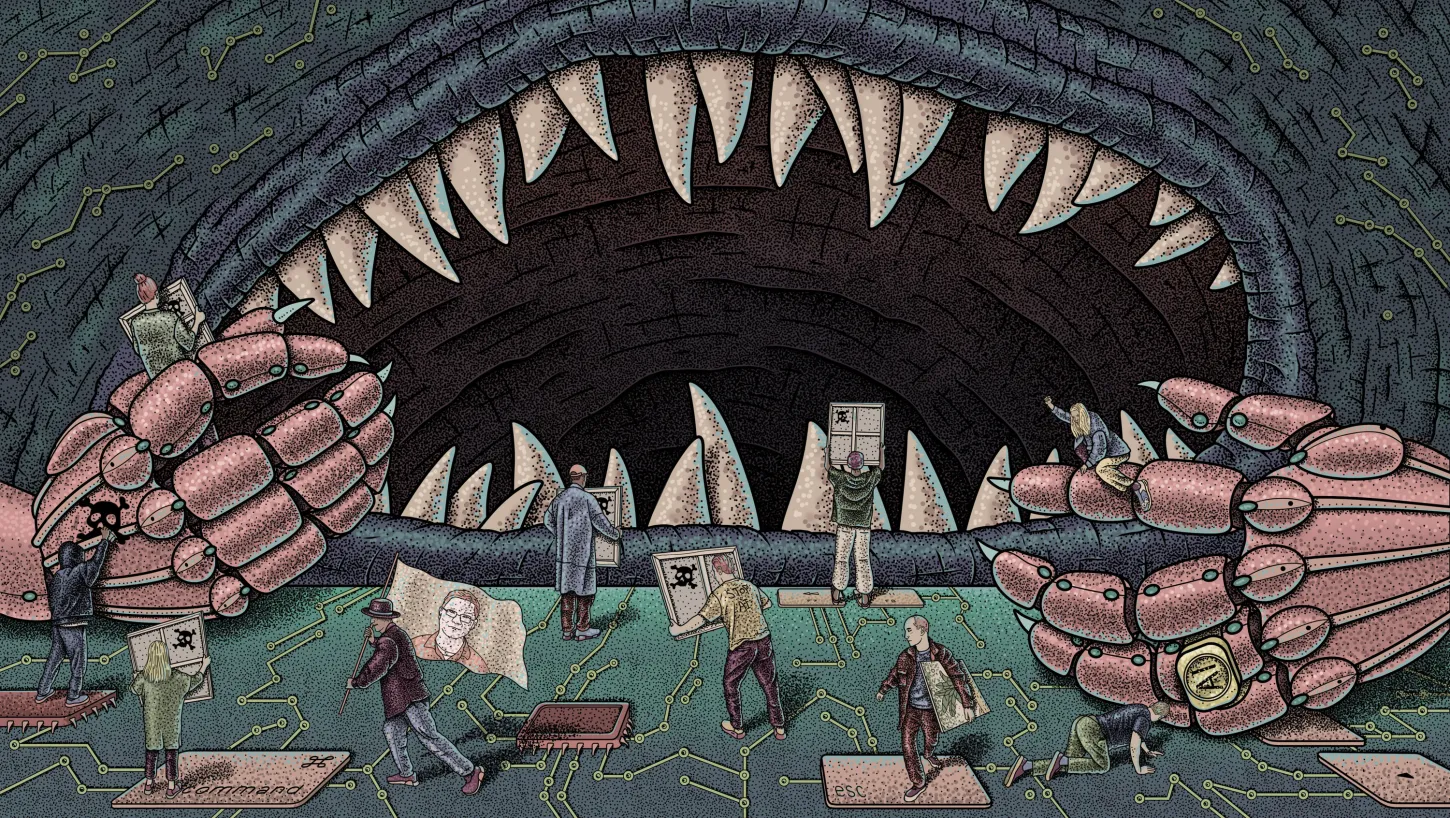
The news: ChatGPT maker OpenAI has built an experimental large language model that is far easier to understand than typical models.

Why it matters: It’s a big deal, because today’s LLMs are black boxes: Nobody fully understands how they do what they do. Building a model that is more transparent sheds light on how LLMs work in general, helping researchers figure out why models hallucinate, why they go off the rails, and just how far we should trust them with critical tasks. Read the full story.

—Will Douglas Heaven

Google DeepMind is using Gemini to train agents inside Goat Simulator 3

Google DeepMind has built a new video-game-playing agent called SIMA 2 that can navigate and solve problems in 3D virtual worlds. The company claims it’s a big step toward more general-purpose agents and better real-world robots.   

The company first demoed SIMA (which stands for “scalable instructable multiworld agent”) last year. But this new version has been built on top of Gemini, the firm’s flagship large language model, which gives the agent a huge boost in capability. Read the full story.

—Will Douglas Heaven

These technologies could help put a stop to animal testing

Earlier this week, the UK’s science minister announced an ambitious plan: to phase out animal testing.

Testing potential skin irritants on animals will be stopped by the end of next year. By 2027, researchers are “expected to end” tests of the strength of Botox on mice. And drug tests in dogs and nonhuman primates will be reduced by 2030.

It’s good news for activists and scientists who don’t want to test on animals. And it’s timely too: In recent decades, we’ve seen dramatic advances in technologies that offer new ways to model the human body and test the effects of potential therapies, without experimenting on animals. Read the full story

>.

—Jessica Hamzelou

This article first appeared in The Checkup, MIT Technology Review’s weekly biotech newsletter. To receive it in your inbox every Thursday, and read articles like this first, sign up here.

The must-reads

I’ve combed the internet to find you today’s most fun/important/scary/fascinating stories about technology.

1 Chinese hackers used Anthropic’s AI to conduct an espionage campaign   
It automated a number of attacks on corporations and governments in September. (WSJ $)
+ The AI was able to handle the majority of the hacking workload itself. (NYT $)
+ Cyberattacks by AI agents are coming. (MIT Technology Review)

2 Blue Origin successfully launched and landed its New Glenn rocket
It managed to deploy two NASA satellites into space without a hitch. (CNN)
+ The New Glenn is the company’s largest reusable rocket. (FT $)
+ The launch had been delayed twice before. (WP $)

3 Brace yourself for flu season
It started five weeks earlier than usual in the UK, and the US is next. (Ars Technica)
+ Here’s why we don’t have a cold vaccine. Yet. (MIT Technology Review)

4 Google is hosting a Border Protection facial recognition app    
The app alerts officials whether to contact ICE about identified immigrants. (404 Media)
+ Another effort to track ICE raids was just taken offline. (MIT Technology Review)

5 OpenAI is trialling group chats in ChatGPT
It’d essentially make AI a participant in a conversation of up to 20 people. (Engadget)

6 A TikTok stunt sparked debate over how charitable America’s churches really are
Content creator Nikalie Monroe asked churches for help feeding her baby. Very few stepped up. (WP $)

7 Indian startups are attempting to tackle air pollution
But their solutions are far beyond the means of the average Indian household. (NYT $)
+ OpenAI is huge in India. Its models are steeped in caste bias. (MIT Technology Review

>)

8 An AI tool could help reduce wasted efforts to transplant organs
It predicts how likely the would-be recipient is to die during the brief transplantation window. (The Guardian)
+ Putin says organ transplants could grant immortality. Not quite. (MIT Technology Review)

9 3D-printing isn’t making prosthetics more affordable
It turns out that plastic prostheses are often really uncomfortable. (IEEE Spectrum)
+ These prosthetics break the mold with third thumbs, spikes, and superhero skins. (MIT Technology Review)

10 What happens when relationships with AI fall apart
Can you really file for divorce from an LLM? (Wired $)
+ It’s surprisingly easy to stumble into a relationship with an AI chatbot. (MIT Technology Review)

Quote of the day

“It’s a funky time.”

—Aileen Lee, founder and managing partner of Cowboy Ventures, tells TechCrunch the AI boom has torn up the traditional investment rulebook.

One more thing

Restoring an ancient lake from the rubble of an unfinished airport in Mexico City

Weeks after Mexican President Andrés Manuel López Obrador took office in 2018, he controversially canceled ambitious plans to build an airport on the deserted site of the former Lake Texcoco—despite the fact it was already around a third complete.

Instead, he tasked Iñaki Echeverria, a Mexican architect and landscape designer, with turning it into a vast urban park, an artificial wetland that aims to transform the future of the entire Valley region.

But as López Obrador’s presidential team nears its end, the plans for Lake Texcoco’s rebirth could yet vanish. Read the full story.

—Matthew Ponsford

We can still have nice things

A place for comfort, fun and distraction to brighten up your day. (Got any ideas? Drop me a line or skeet ’em at me.)

+ Maybe Gen Z is onto something when it comes to vibe dating.
+ Trust AC/DC to give the fans what they want, performing Jailbreak for the first time since 1991.
+ Nieves González, the artist behind Lily Allen’s new album cover, has an eye for detail.
+ Here’s what AI determines is a catchy tune.

Expert Analysis for Orange County Businesses

How this impacts SMBs in Southern California

Tech News Roundup: OpenAI has developed a new large language model (LLM) that enhances the transparency of AI technologies, making it easier for researchers and businesses to understand how these models function. This advancement comes at a crucial time as companies increasingly turn to AI for various applications.

For small and medium businesses (SMBs) in Orange County and Southern California, this development signifies a shift towards more reliable and understandable AI solutions. As AI continues to permeate different sectors, having clarity on how these models operate can help businesses make informed decisions about integrating AI into their operations. The ability to understand the capabilities and limitations of AI can enhance trust, especially when deploying AI in critical tasks such as customer service automation or data analysis.

At The Network Company, we recognize the importance of embracing AI while ensuring security and efficiency. Our managed IT services can help you integrate AI technologies safely, while our cybersecurity solutions ensure that your business data remains protected from emerging threats. Plus, with our cloud backup and BCDR solutions, you can safeguard your critical information against potential disruptions associated with new technology implementations. If you’re looking to leverage AI in your business strategy, don't hesitate to contact us for personalized support.

Read the full article: Original Source Link

Frequently Asked Questions

What is OpenAI's new LLM?

It is an experimental language model designed to improve understanding of AI operations.

How is animal testing being phased out in the UK?

The UK plans to eliminate certain animal tests by 2027 and reduce others by 2030, using alternative technologies for research.

Content Quality

Last Reviewed:November 18, 2025
Fact-Checked:November 18, 2025
Sources:33 verified sources
Word Count:963 words

Article Tags

The Download
OpenAI LLM
AI transparency
phasing out animal testing
ethical research
large language model
Google DeepMind
SIMA 2 agent
biotechnology advancements
animal testing alternatives
AI in healthcare
technology news
machine learning
Gemini AI
ethical AI
R

About Rhiannon Williams

Content Author

Rhiannon Williams is a technology journalist with a focus on artificial intelligence and biotechnology. With extensive experience in covering the intersection of tech and ethics, she brings insights into how innovations are transforming industries.

Expertise: Artificial Intelligence, Biotechnology, Technology Journalism, Ethical Technology, Research Methodologies

Ready to Transform Your Business?

Discover how our expert IT solutions can help your business thrive.