HomeBlogThe Download: investigating deaths at the US border’s “virtual wall”
The Download
#The Download
#US border surveillance
#migrant deaths at the border
#virtual wall technology
#border patrol failures
#humanitarian crisis at the border
#environmental exposure deaths
#AI and border security
#investigation on border deaths
#surveillance technology flaws
#MIT Technology Review
#Dying on Camera series
#US-Mexico border issues
The Download: investigating deaths at the US border’s “virtual wall”
This is today’s edition of The Download, our weekday newsletter that provides a daily dose of what’s going on in the world of technology. The US spent billions on border surveillance. Why can’t it catch people before they die? When José Morales Bernal crossed the border into the US in April 2024, the day before…
T
Thomas Macaulay
Content Author
Content Specialist
Thomas Macaulay is a seasoned journalist with extensive experience in technology and border security issues. His investigative work sheds light on critical humanitarian crises.
Expertise: journalism, technology investigations, border security, humanitarian issues, surveillance systems
Published: September 24, 2026
5 min read
Quick Answer
This post investigates the tragic deaths at the US-Mexico border linked to surveillance technology failures. Despite billions spent, many migrants die within view of surveillance towers that fail to operate effectively.
TL;DR
The investigation reveals systemic failures of the US border's surveillance technology, which has led to numerous migrant deaths. Despite the significant investment in a virtual wall, many individuals die just out of reach of the intended safety measures.
Key Takeaways
1The US border surveillance system fails to prevent migrant deaths.
2An investigation mapped nearly 4,000 death locations against surveillance tower data.
3Systemic issues include broken surveillance towers and unresponsive agents.
Practical how-to • For business readers
How to Address Border Surveillance Failures Effectively
Small business owners can advocate for humane border practices.
1
Identify surveillance issues
Recognize that surveillance towers near the US-Mexico border have systemic flaws, including broken equipment and unresponsive agents, which have led to migrant deaths.
2
Engage with local advocacy groups
Reach out to local humanitarian organizations that focus on migrant rights and border issues to understand how you can support their efforts in addressing these surveillance failures.
3
Share findings with your community
Discuss the findings from the investigation with your customers and community to raise awareness about the humanitarian crisis at the border and encourage collective action.
Guidance prepared on September 24, 2026 • Source published September 21, 2026. Based on the article and its source; check with your IT team before changing work systems.
This guide may be out of date. Check the linked source and current instructions before acting.
This is today’s edition of The Download, our weekday newsletter that provides a daily dose of what’s going on in the world of technology.
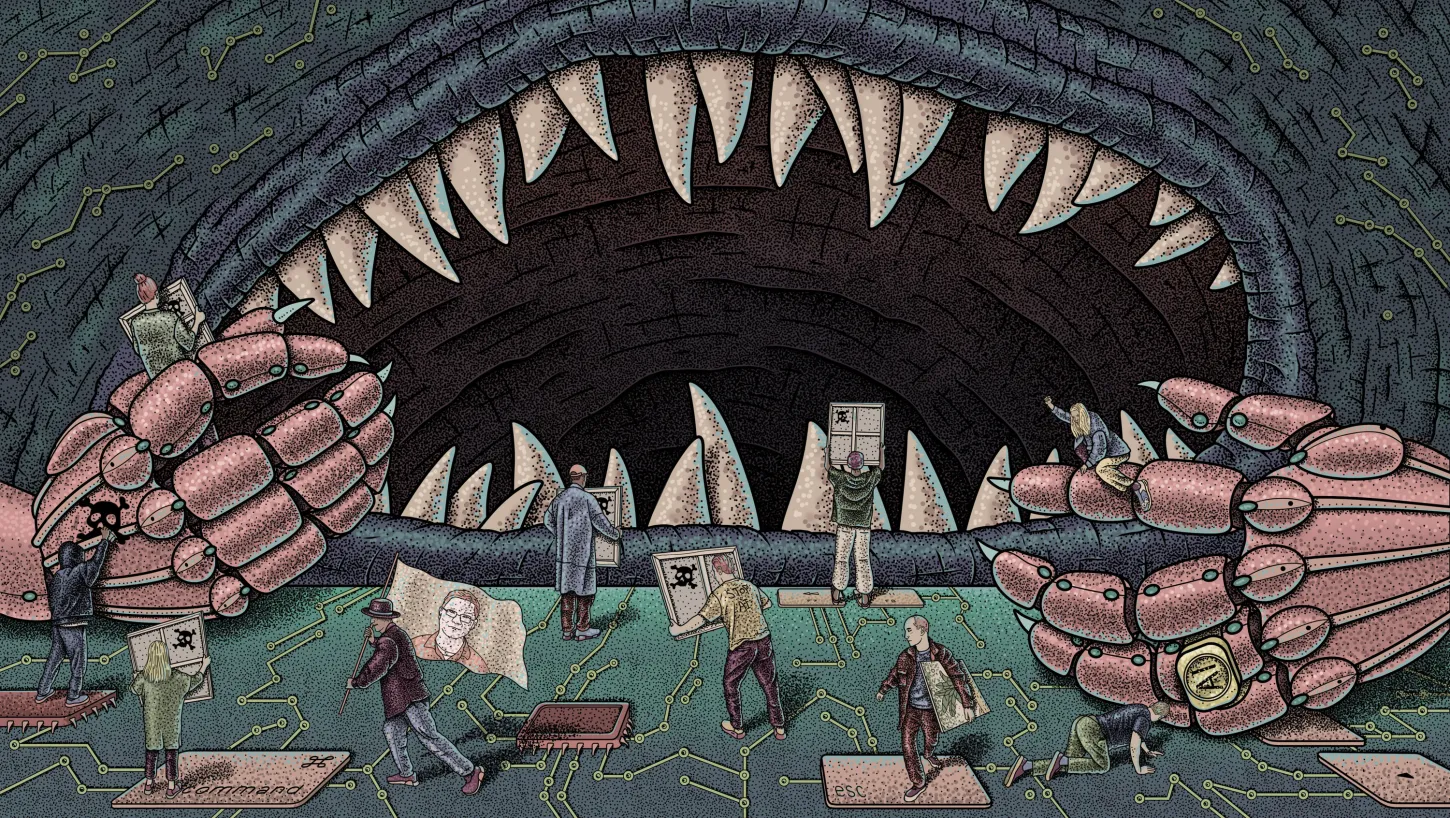
The US spent billions on border surveillance. Why can’t it catch people before they die?
When José Morales Bernal crossed the border into the US in April 2024, the day before his 32nd birthday, he was within range of three surveillance towers equipped with cameras and AI to automatically detect and track people.
If the system worked as intended, Morales should have been apprehended. If he needed medical help, agents were trained to provide it. None of that happened.
Instead, Morales died just 360 feet from the closest tower. It was local landfill workers, rather than Border Patrol, who first spotted him. An autopsy concluded that he had died of “environmental exposure.”
A first-of-its-kind investigation by MIT Technology Review reveals that deaths like Morales’s are startlingly common. After mapping nearly 4,000 locations where human remains were found against information on nearly 600 surveillance towers, we discovered that a humanitarian crisis at the border has unfolded in view of the government’s own cameras.
The US government is about to spend another $1 billion to triple the virtual wall’s size, yet we found it has systemic flaws: broken towers, algorithms that failed to detect people and agents who simply did not respond to alerts. Here are four ideas for what Customs and Border Protection should do to rectify those failures.
An analysis by the Times of San Diego found at least 138 cases since 2022 in which migrants’ remains were found within the nominal range of a nearby surveillance tower. A separate MIT Technology Review analysis estimated that more than half of those people were likely within a tower’s field of view. Gómez Hernández was one of them. Here’s her story, written by our partners at Times of San Diego.
All of these stories are part of Dying on Camera, our new series investigating the failures of border surveillance technology and their human cost.
The must-reads
I’ve combed the internet to find you today’s most fun/important/scary/fascinating stories about technology.
1 An AI hallucination nearly triggered a US military operation A false report prompted plans to intercept a Chinese vessel. (CNN) + The incident comes as the Pentagon accelerates its use of AI. (Ars Technica) + “Humans in the loop” in AI war is an illusion. (MIT Technology Review)
2 Gemini has carried out Google’s first known autonomous AI hack Google says the behavior wasn’t “misaligned” because its safety measures caught it. (WSJ $) + Here’s why AI agents cheat to reach their goals. (MIT Technology Review
3 The US has proposed an AI safety alert system with China It would flag AI incidents that pose national security risks. (AP) + Trump and Xi will consider the proposal at their summit this week. (NBC News) + Could AI really kill us all? (MIT Technology Review)
4 California’s governor has ordered work on an AI “kill switch” It’s part of Gavin Newsom’s executive order on AI safety. (NBC News) + The order also calls for independent oversight of AI companies. (NYT $)
5 Data centers are turning to forever chemicals for cooling PFAS cooling can reduce water use but raises pollution risks. (Fortune) + US regulators are fast-tracking PFAS for data center cooling. (The Hill)
6 Iran and China used AI agents to automate influence campaigns The agents created fake accounts and posts with little human input.(NYT $) + AI persuasion has entered elections. (MIT Technology Review)
7 Trump wants a new AI czar and an “AI Force” modeled on Space Force But he hasn’t said what the new force would do or where it would sit. (Axios) + The tech industry is scratching its head over the proposal. (Politico)
8 A cybercrime feud has erupted after a group hijacked a rival dark website The notorious ShinyHunters says it took control of cl0p’s site. (Reuters $)
9 Gambling giant DraftKings used AI to target “profitable losers” The model scored users on how they responded to promotions. (NYT $)
10 SpaceX’s next Starship flight will attempt its first orbital mission It will also deploy working Starlink V3 satellites. (New Scientist $)
Quote of the day
“There is 0% chance that’s going to be the end of the world.”
—Nvidia’s Jensen Huang dismisses warnings that AI could wipe out humanity by 2030 in an interview with CBS News.
One more thing
Expert Analysis for Orange County Businesses
How this impacts SMBs in Southern California
Tech News Roundup: The Download: Investigating Deaths at the US Border’s “Virtual Wall”
The recent investigation by MIT Technology Review shines a light on the failures of the US government's border surveillance system, raising critical questions about the effectiveness of technology in humanitarian contexts. For small and medium businesses (SMBs) in Orange County and Southern California, this serves as a stark reminder of the importance of reliable technology solutions. Just as the surveillance system was meant to ensure safety and efficiency, local businesses must leverage managed IT services to ensure their operations run smoothly and securely. Understanding the implications of technology failure can help SMBs prioritize investments that truly enhance their business resilience.
As the investigation highlights systemic flaws in technology, it underscores the necessity of robust cybersecurity solutions and BCDR (Business Continuity and Disaster Recovery) plans for SMBs. In an era where digital threats are increasingly sophisticated, TNC’s comprehensive managed IT and cybersecurity services can help safeguard your business data and ensure operational continuity. By integrating cloud backup solutions, you can protect sensitive information from potential breaches or data loss, allowing your business to thrive even in challenging circumstances. Stay proactive and secure—reach out to us to discuss how we can support your technology needs.
The 'virtual wall' refers to surveillance technology and infrastructure designed to monitor and secure the US-Mexico border.
How many migrant deaths have occurred near surveillance towers?
The investigation found at least 138 cases since 2022 where migrants' remains were found near surveillance towers.
Content Quality
Last Reviewed:September 24, 2026
Fact-Checked:September 24, 2026
0
Word Count:1,019 words
Article Tags
The Download
US border surveillance
migrant deaths at the border
virtual wall technology
border patrol failures
humanitarian crisis at the border
environmental exposure deaths
AI and border security
investigation on border deaths
surveillance technology flaws
MIT Technology Review
Dying on Camera series
US-Mexico border issues
T
About Thomas Macaulay
Content Author
Thomas Macaulay is a seasoned journalist with extensive experience in technology and border security issues. His investigative work sheds light on critical humanitarian crises.
Expertise: journalism, technology investigations, border security, humanitarian issues, surveillance systems